Proprietary Blends Explained: How to Read One on Any Supplement Label
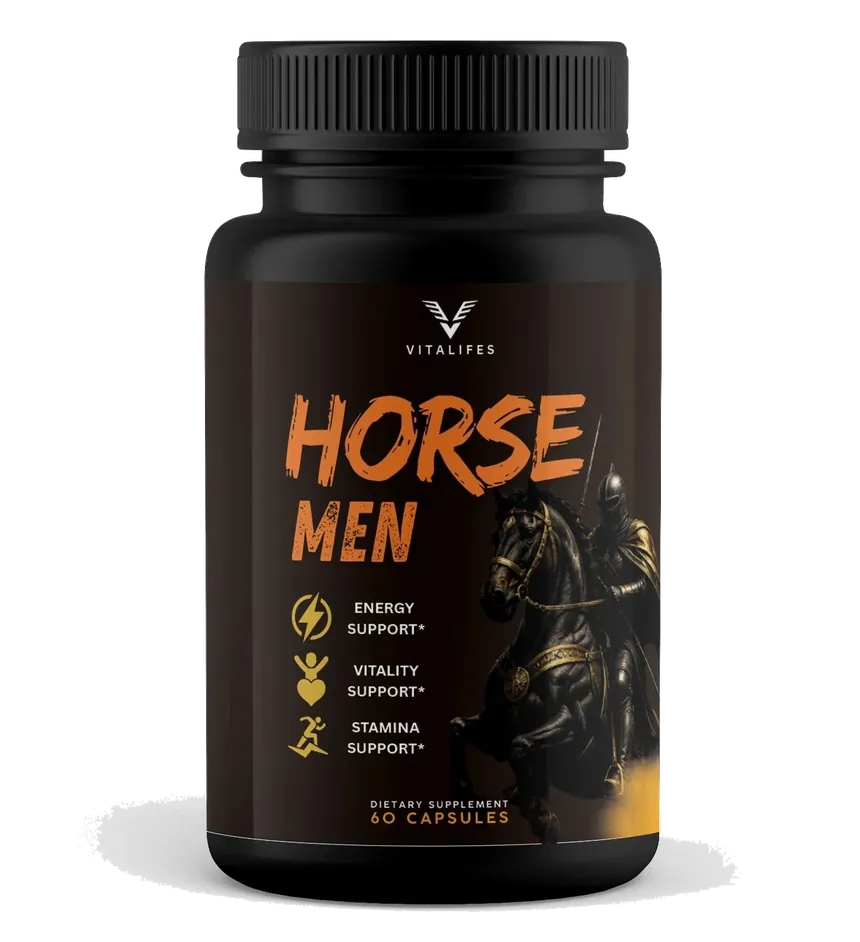
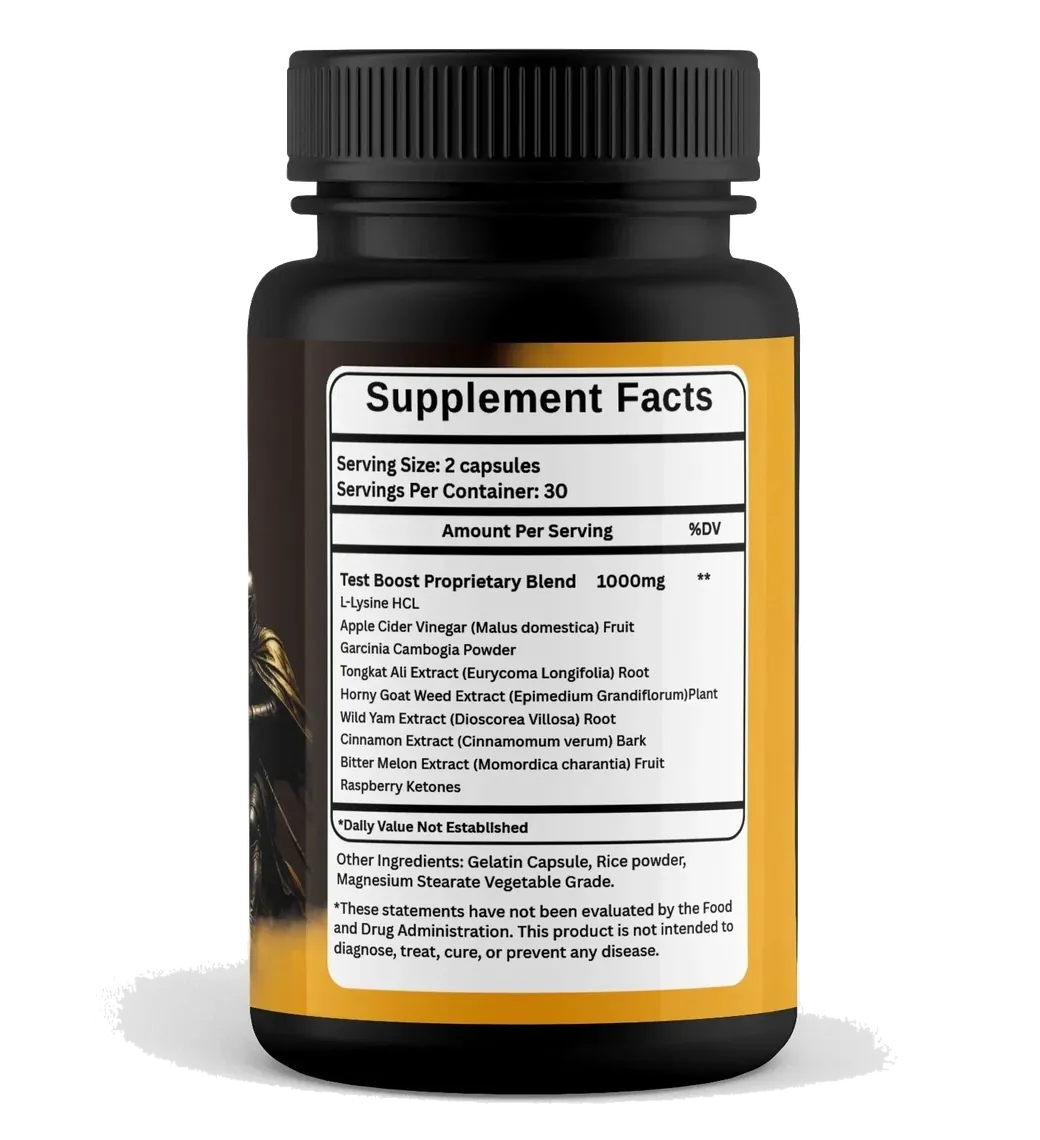
A proprietary blend lists ingredient names in descending order by weight, then states one combined milligram total instead of a line for each ingredient. That format is legal under US label rules. Horsemen's Test Boost Proprietary Blend, 1,000 mg across 9 ingredients, is a real example: the label names each ingredient but never says how many milligrams of any single one is inside.
Why Does a Proprietary Blend Look Different From Other Labels?
One combined weight, several ingredient names, no per-ingredient amounts. Here is what that means.
Flip most supplement bottles around and you expect a clean list: ingredient name, then a milligram amount next to it. A proprietary blend breaks that pattern. It groups several ingredients under one name, states one combined weight, and stops there.
That is not a red flag by itself. It is a legal label format with rules of its own. This guide shows you exactly how to read one, using the real label on the back of a Horsemen bottle as the worked example.
What Is a Proprietary Blend, Exactly?
A proprietary blend is a named group of ingredients that a supplement maker lists together under one combined weight, instead of stating each ingredient's own milligram amount. US supplement labeling rules allow this, on one condition: the ingredients inside the blend must be listed in descending order by weight, heaviest first.
Why makers use this format
A blend can protect a specific ratio a company sees as its own formulation, and it can also simplify a label that would otherwise need 9 or more separate lines. Whatever the reason, the practical effect is the same for a shopper: you see names, in order, and one number.
What the order actually tells you
Because the rule is descending order by weight, the first-listed ingredient carries the most weight in the blend, and the last-listed one carries the least. That order is a real clue. It is the only quantitative information a proprietary blend gives you about any individual ingredient.
A Worked Example: Horsemen's Test Boost Blend
This is the actual panel. Here is what it does, and does not, tell you.
The blend name and total
Horsemen's back label states "Test Boost Proprietary Blend, 1,000 mg" as a serving of 2 capsules. That single number is the combined weight of everything listed under it.
The 9 names, in order
Below the total, the label lists L-Lysine HCL, apple cider vinegar, garcinia cambogia, tongkat ali, horny goat weed, wild yam, cinnamon, bitter melon, and raspberry ketones, in that order. Under the descending-weight rule, L-Lysine HCL carries the largest share, and raspberry ketones carry the smallest.
A second number worth noticing
Horsemen's printed directions say "take one (1) or two (2) capsules daily," but the Supplement Facts panel sets its serving size at 2 capsules. That means the full, labeled 1,000 mg blend only applies at the 2-capsule serving; one capsule delivers roughly half that blend, about 500 mg across the same 9 names. The label itself does not spell out that difference in plain language, so it is easy to miss on a first read.
- L-Lysine HCLnot published
- Apple Cider Vinegarnot published
- Garcinia Cambogianot published
- Tongkat Alinot published
- Horny Goat Weednot published
- Wild Yamnot published
- Cinnamonnot published
- Bitter Melonnot published
- Raspberry Ketonesnot published
Equal bars are a placeholder, not a claim. The label lists 9 ingredients in one 1,000 mg total and does not say how much of each is inside.
What Can You Learn From the Label, and What Can't You?
- The blend's combined weight: 1,000 mg per 2-capsule serving, for Horsemen.
- Every ingredient's name, in descending order by weight.
- The non-active ingredients used to build the capsule itself (gelatin, rice powder, magnesium stearate).
- How many milligrams of any single named ingredient, such as tongkat ali, are inside.
- Whether an extract is standardized, or to what ratio or percentage of active compound.
- Whether the blend was ever tested as a whole in a clinical trial.
This gap matters most for ingredients with a known research dose. Our tongkat ali dose research guide lays out the 200 to 600 mg a day range used in human trials. Inside a 1,000 mg, 9-ingredient blend, there is no way to confirm tongkat ali reaches that range, or falls well short of it.
How Do You Size Up the Ingredients Inside a Blend?
Line up each ingredient's research dose next to the blend's total weight, then do the division.
| Ingredient (label order) | Research dose range | Evidence strength | Share of Horsemen's 1,000 mg |
|---|---|---|---|
| L-Lysine HCL | 1000 mg/day tested in the main RCT; a review suggests doses above 3000 mg/day may work better | Weak | not published |
| Apple Cider Vinegar | 15-30 mL/day (about 750-1500 mg acetic acid) | Moderate | not published |
| Garcinia Cambogia Powder | roughly 900-2800 mg/day hydroxycitric acid (HCA) in pooled RCTs | Weak | not published |
| Tongkat Ali Extract | 200-600 mg/day standardized root extract | Moderate | not published |
| Horny Goat Weed Extract | no established human efficacy dose; icariin (its main active compound) was tested up to 1680 mg/day for safety only | Weak | not published |
| Wild Yam Extract | not established; the one controlled human trial used a topical cream, not an oral dose | Weak | not published |
| Cinnamon Extract | roughly 1-6 g/day in most human RCTs (predominantly Cassia cinnamon, not the Cinnamomum verum used in this product) | Moderate | not published |
| Bitter Melon Extract | roughly 500-2000 mg/day dried fruit or extract in most trials | Moderate | not published |
| Raspberry Ketones | no human trials exist; only animal studies (rodent dietary doses) | Weak | not published |
Tongkat ali has the most human research behind it in this group, with trials using 200 to 600 mg a day and a 2022 meta-analysis linking that range to higher testosterone, mainly in men who started low (Leisegang et al., 2022). Garcinia cambogia and raspberry ketones sit at the other end: a meta-analysis found garcinia produced only a small, short-term weight change over placebo, with more stomach side effects (Onakpoya et al., 2011), and US federal health information notes garcinia has been linked to rare, sometimes severe liver injury cases (National Center for Complementary and Integrative Health (NCCIH), 2024). With 9 names sharing one 1,000 mg total, an even split works out to about 111 mg per ingredient on average, below the lowest tongkat ali research dose on its own.
How Do You Read Any Proprietary Blend, Step by Step?
Read the blend name and total weight first
Find the combined milligram number, and note how many ingredients share it. A 1,000 mg blend with 9 names splits very differently than a 1,000 mg blend with 2 names.
Check the ingredient order
US rules require descending order by weight. The first name carries the most weight in the blend; the last name carries the least.
Look up a research dose for the ingredient you care about most
Our Horsemen ingredients page lists the research dose and evidence strength for every ingredient in this blend, cited to the actual trials.
Do the division, then judge for yourself
Divide the blend's total by the number of ingredients for a rough average share, then compare that to the research dose. If the average share falls well under the lowest research dose, treat the ingredient's presence as a bonus, not a guaranteed research-level amount.
Decide what matters to you
Some buyers are fine trusting a maker's formulation without a published number. Others want a single-ingredient product with its own stated dose. Neither choice is wrong, but know which one you are making.
Questions readers ask
Is a proprietary blend legal in the US?
Yes. US supplement labeling rules allow a maker to list a blend's combined weight instead of each ingredient's individual amount, as long as the ingredients are named in descending order by weight.
Why won't a company just publish each ingredient's amount?
Reasons vary, and are not published for any single brand. A blend format can protect a specific ratio a company treats as its own formulation, and it also shortens a label that would otherwise need one line per ingredient.
How much tongkat ali is inside Horsemen's blend?
Not published. Tongkat ali is one of 9 ingredients inside Horsemen's 1,000 mg Test Boost Proprietary Blend, and the label states only the combined total, not any single ingredient's share.
Does ingredient order tell you anything real?
Yes. Because US rules require descending order by weight, the first-listed ingredient carries the largest share of the blend, and the last-listed one carries the smallest. It is the one quantitative clue a proprietary blend label gives you.
Can I ask a company directly for the individual amounts?
You can ask, but a company is not required to answer with exact figures for a proprietary blend. Some will share more detail than the label states; others will not.
Is a blend format ever combined with a full ingredient breakdown?
Yes, some labels list a proprietary blend for part of the formula and separate, stated milligram amounts for other ingredients outside that blend. Read the full Supplement Facts panel to see which format applies to which ingredient.
Keep reading
Energy Habits After 40
Daily habits for energy and stamina after 40, backed by real research, that matter more than any single capsule you take...
Read →Tongkat Ali Dose
What clinical trials on tongkat ali dose actually used, how that compares with a 1,000 mg, 9-ingredient blend, and what ...
Read →How much does Horsemen cost?
What each pack holds, and which one suits a first order.
Read →Order Horsemen from the authorized retailer
60 capsules per bottle, a 30-day supply at the label serving. Pack prices show on the secure listing before you pay, and every pack carries the same money-back guarantee. Questions first? The contact page says who answers what.